

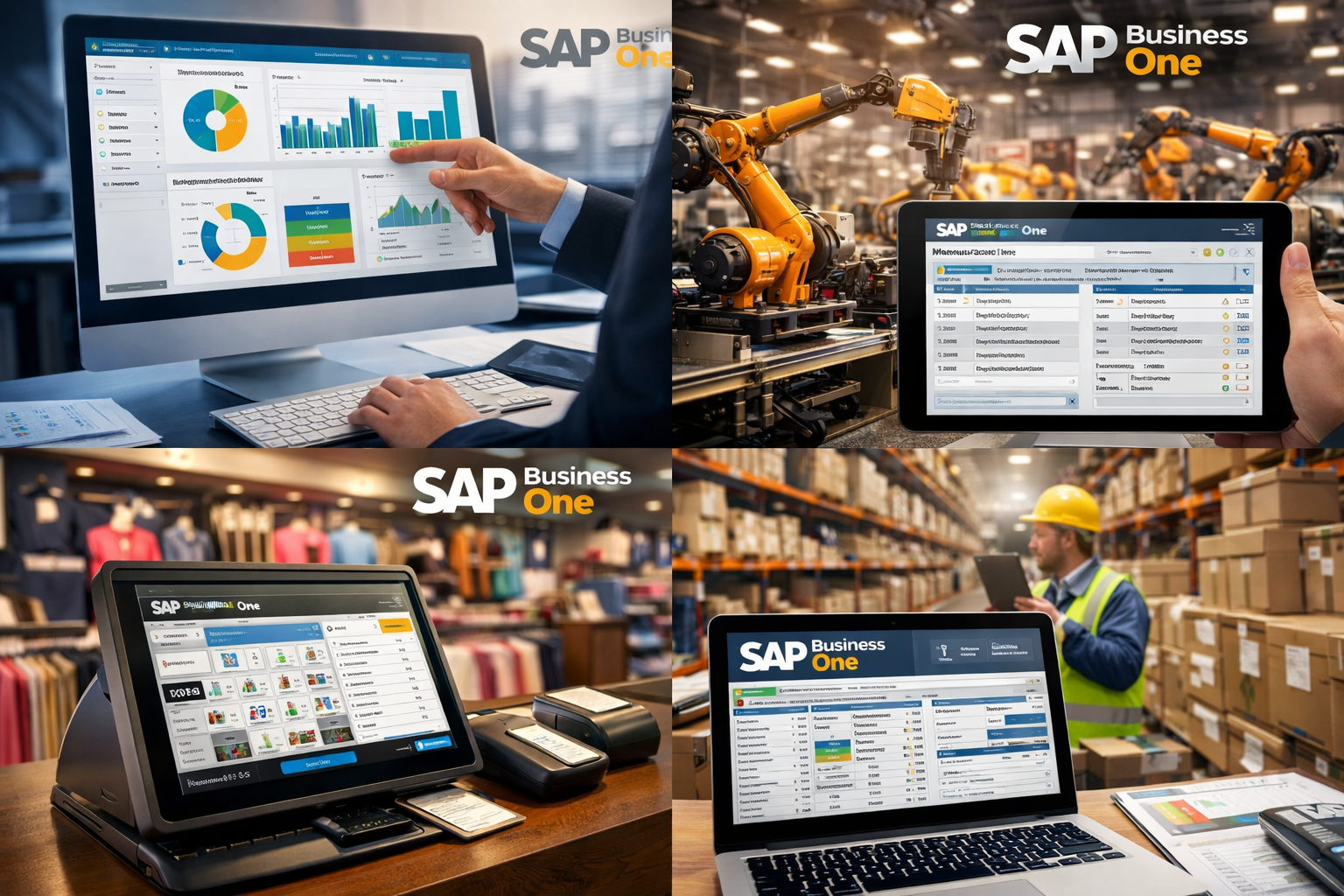
Introduction to SAP Business One
In today’s fast-paced digital economy, businesses of all sizes seek an integrated solution to manage their operations efficiently. SAP Business One (SAP B1) is one such powerful ERP (Enterprise Resource Planning) system designed specifically for small and mid-sized enterprises (SMEs).
But who should use SAP Business One? Whether you’re a growing manufacturer, a distributor managing inventory, or a retail business needing real-time analytics—this guide explores industries, company sizes, and use cases where SAP Business One delivers maximum value.
What Is SAP Business One?
Developed by SAP SE, SAP Business One is a comprehensive ERP solution designed to streamline core business functions—finance, sales, purchasing, inventory, and production—all within a single system.
Unlike larger SAP systems such as SAP S/4HANA, SAP Business One is tailored for small and medium businesses, offering affordability, flexibility, and scalability.
Key Features of SAP Business One
- Financial Management: Streamlined accounting, budgeting, and reporting.
- Sales & CRM: Complete visibility into customer relationships.
- Purchasing & Inventory Control: Efficient procurement and warehouse operations.
- Production Planning: End-to-end material requirements planning (MRP).
- Reporting & Analytics: Real-time dashboards powered by SAP HANA.
- Mobility: Access business data from any device through mobile apps.
Why Businesses Choose SAP Business One
The Power of Centralized Business Management
Instead of juggling multiple software tools for different departments, SAP Business One consolidates all business functions into one unified system. This helps eliminate data duplication and ensures all departments work from the same source of truth.
Real-Time Data and Analytics Advantage
With real-time analytics, decision-makers can act fast, spotting trends and identifying performance bottlenecks. For growing companies, this agility is a key competitive advantage.
Cost Efficiency and Scalability
SAP Business One offers modular pricing, making it cost-effective for small firms while allowing scalability as the business grows.
Ideal Company Size for SAP Business One
Small Businesses and Startups
SAP Business One empowers startups to automate workflows and scale operations quickly without the overhead of multiple systems.
Medium-Sized Enterprises
For mid-sized companies managing complex supply chains, SAP B1 ensures smoother coordination between procurement, production, and finance.
Growing Businesses with Expansion Plans
Companies expanding globally benefit from SAP’s multi-currency and multi-language capabilities, ensuring seamless operations across geographies.
Industries That Benefit Most from SAP Business One
SAP Business One streamlines manufacturing with tools for bill of materials (BOM) management, production scheduling, and inventory tracking.
Wholesale and Distribution
Automates order management, improves inventory accuracy, and enhances supplier relationships.
Retail and E-Commerce
Integrates online and offline sales, tracks customer behavior, and optimizes inventory replenishment.
Professional Services
Manages project costing, timesheets, and billing for consulting and IT firms.
Food and Beverage Industry
Ensures compliance with food safety regulations, improves batch traceability, and minimizes waste.
Pharmaceutical and Healthcare Sectors
Facilitates FDA and GMP compliance, lot tracking, and product serialization.
Construction and Real Estate Management
Handles project budgets, progress billing, and vendor management effectively.
SAP Business One Use Cases
Inventory and Warehouse Management
Track stock levels, manage multiple warehouses, and automate reorder alerts.
Financial Accounting and Control
Consolidate financial data, automate journal entries, and maintain audit trails.
Sales and CRM
Track leads, manage sales pipelines, and boost conversion rates with better customer insights.
Procurement and Supply Chain Optimization
Optimize purchasing decisions using vendor performance analytics and real-time procurement reports.
Production Planning and Scheduling
Plan manufacturing runs efficiently with real-time resource allocation.
Reporting and Business Intelligence (BI)
Generate insightful reports with built-in dashboards, aiding data-driven decisions.
SAP Business One stands out for its balance of affordability, functionality, and customization for growing businesses.
Signs Your Business Needs SAP Business One
- Struggling with manual spreadsheets and data errors.
- Using multiple disconnected systems for finance, inventory, and sales.
- Facing inefficiencies in procurement or supply chain management.
- Experiencing growth pains without operational control.
Benefits of Implementing SAP Business One
Increased Efficiency and Productivity
Automation reduces manual effort, freeing staff to focus on strategic goals.
Improved Decision-Making
Real-time analytics and dashboards empower smarter, data-driven decisions.
Enhanced Customer Satisfaction
Centralized CRM ensures better response times and personalized customer service.
Better Compliance and Security
Built-in compliance features help businesses adhere to industry standards and regulations.
Common Myths About SAP Business One
“It’s Only for Large Corporations”
In reality, SAP Business One is designed specifically for SMEs, offering enterprise-grade capabilities at SME-friendly pricing.
“It’s Too Expensive for SMEs”
Its modular structure allows businesses to pay only for what they use, making it a cost-efficient investment.
“It’s Too Complex to Implement”
With experienced SAP partners, the implementation process is streamlined and manageable even for smaller teams.
Implementation Best Practices
- Choose the Right SAP Partner: Select certified SAP implementation experts.
- Plan Data Migration Carefully: Clean and map data before migration.
- Invest in User Training: Ensure your team is comfortable using the system.
- Post-Implementation Support: Continuously monitor and optimize system performance.
Real-World Success Stories
Manufacturing Firm Streamlines Operations
A mid-sized manufacturer reduced production delays by 35% using SAP Business One’s production planning tools.
Retail Chain Gains Inventory Visibility
A retail company integrated POS data with SAP Business One, cutting stockouts by 25%.
Distributor Reduces Supply Chain Costs
A distribution firm automated procurement and logistics, saving $50,000 annually.
FAQs About SAP Business One
1. What size company is SAP Business One best suited for?
SAP Business One is ideal for small to medium-sized enterprises (10–500 employees).
2. Is SAP Business One cloud-based?
Yes. It’s available both on-premise and on cloud platforms, providing flexibility.
3. How long does implementation take?
Implementation typically takes 8–12 weeks, depending on company size and customization.
4. Can SAP Business One handle multi-currency transactions?
Yes, it supports multi-currency and multi-language operations for global businesses.
5. What industries use SAP Business One most?
Manufacturing, distribution, retail, and services are the top industries using SAP Business One.
6. Is SAP Business One suitable for startups?
Absolutely. Startups benefit from automation, scalability, and cost control features.
Conclusion: Is SAP Business One Right for You?
If your business is growing, managing complex operations, or struggling with disconnected systems, then SAP Business One is a smart investment. Its modular design, powerful analytics, and scalability make it perfect for SMEs aiming for digital transformation and operational excellence.