

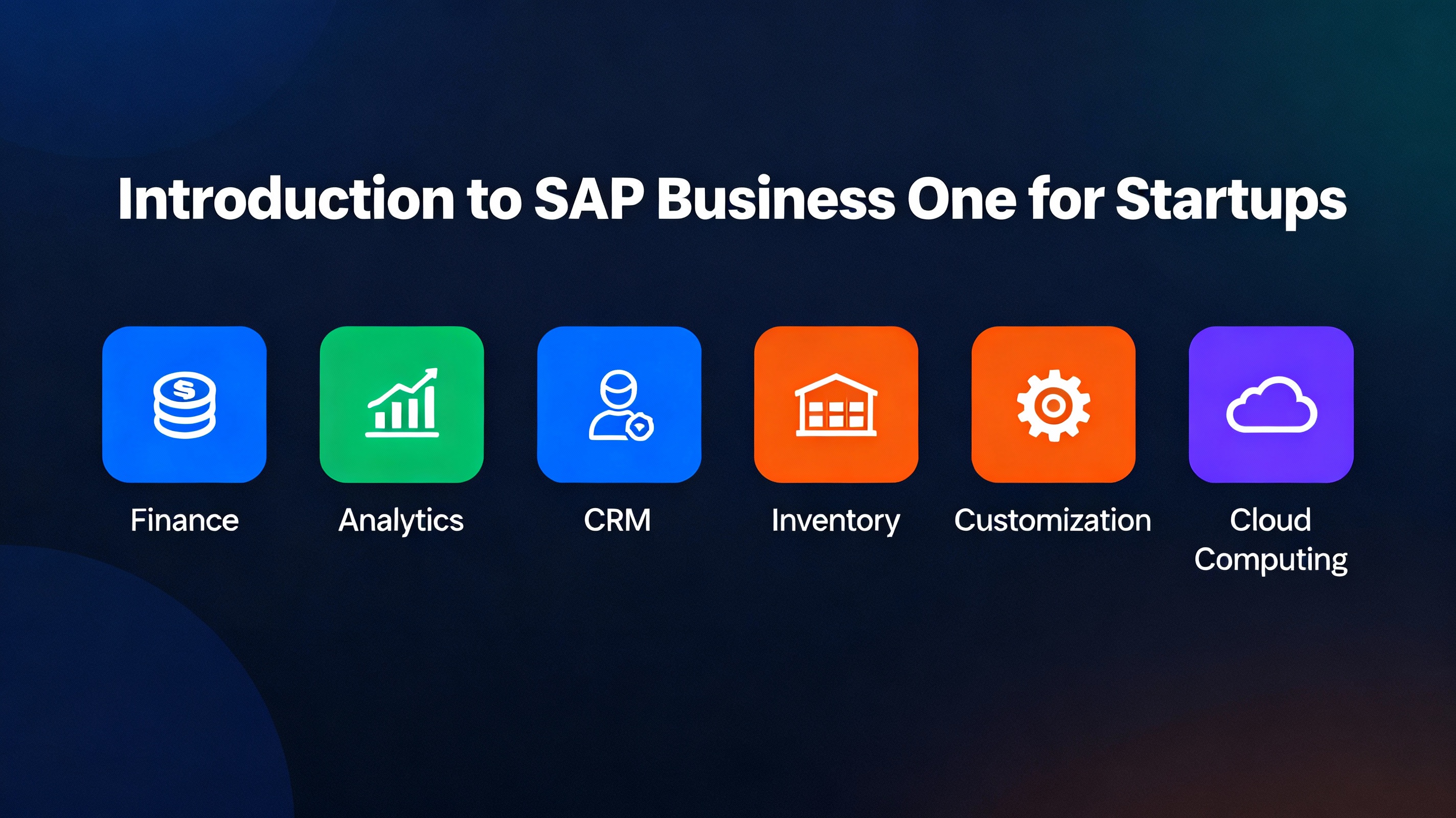
Introduction to SAP Business One for Startups
In today’s fast-paced digital economy, startups face the dual challenge of growth and efficiency. As businesses expand, managing finance, operations, sales, and customer data manually becomes overwhelming. That’s where SAP Business One for Startups steps in—a powerful ERP (Enterprise Resource Planning) solution designed to simplify complex processes under one system. But is it truly worth it for emerging startups? Let’s find out.
What Is SAP Business One?
SAP Business One is an integrated ERP system created for small and medium-sized businesses (SMBs). It centralizes business operations, from financial management to inventory control, CRM, and analytics, helping startups gain real-time visibility and data-driven insights. Unlike basic accounting software, SAP Business One enables automation and scalability—two key growth factors for startups aiming to compete globally.
Why Startups Are Turning Toward ERP Solutions
Startups today operate in a data-driven environment. To keep up, they need systems that streamline workflows, cut manual errors, and provide instant insights. ERP solutions like SAP Business One help startups bridge operational gaps, automate repetitive tasks, and make informed strategic decisions.
Key Features of SAP Business One That Benefit Startups
Comprehensive Financial Management
SAP Business One provides startups with complete control over accounting, budgeting, and cash flow. From automating journal entries to managing multiple currencies, it ensures financial accuracy—critical for startups managing tight budgets.
Real-Time Analytics and Reporting
Data is power. With SAP Business One’s integrated analytics and reporting tools, startups can access real-time dashboards, forecast sales trends, and evaluate performance metrics instantly.
Integrated CRM Capabilities
The built-in Customer Relationship Management (CRM) module enables startups to nurture leads, track interactions, and boost sales conversions—all from a single platform.
Supply Chain and Inventory Management
For startups in manufacturing, retail, or logistics, SAP Business One simplifies supply chain management. It ensures optimal stock levels, tracks shipments, and minimizes bottlenecks.
Customization and Add-Ons for Industry Needs
Every startup is unique. SAP Business One offers flexible add-ons and customization options for industries like retail, tech, and healthcare, allowing startups to tailor the software to their specific workflows.
Pros and Cons of Using SAP Business One for Startups
| Pros | Cons |
|---|---|
| Scalable as your startup grows | Higher initial cost compared to basic tools |
| Centralized business operations | Requires training and onboarding |
| Real-time analytics for better decisions | May include features not immediately needed |
| Reliable and globally supported | Complex customization can take time |
Cost Analysis: Is SAP Business One Affordable for Startups?
Licensing Models and Subscription Options
SAP Business One is available in on-premise and cloud-based versions. The cloud option is generally more affordable for startups, with monthly subscriptions starting at a few hundred dollars per user. Licensing flexibility allows businesses to scale as they grow.
Implementation and Maintenance Costs
Implementation can be a significant cost factor. While initial setup may range from $5,000 to $25,000 depending on complexity, cloud deployment can minimize upfront costs. Partnering with a certified SAP provider can help reduce setup time and errors.
Comparing SAP Business One with Other ERP Solutions
Compared to alternatives like Odoo or NetSuite, SAP Business One offers deeper integration and stability, backed by SAP’s global reputation. However, for very early-stage startups, lighter ERP tools might be more cost-effective until scaling justifies SAP’s investment.
Case Studies: Startups That Succeeded with SAP Business One
Tech Startups Streamlining Operations
A SaaS startup in Singapore implemented SAP Business One to manage financial and customer data. Within six months, they reduced reporting time by 40% and improved lead conversion by 30%.
Manufacturing Startups Enhancing Supply Chain Efficiency
A European manufacturing startup used SAP Business One to track raw materials and automate reordering. The result? 25% fewer stockouts and 15% improved delivery times.
When Should a Startup Consider SAP Business One?
Growth Stage Indicators
If your startup is expanding its operations, handling complex inventory, or managing multiple business locations, it’s time to consider SAP Business One.
Operational Complexity Factors
Businesses struggling with disjointed systems or inconsistent data reporting can greatly benefit from an integrated ERP like SAP Business One.
Tips for Implementing SAP Business One Successfully
- Partner with Certified SAP Consultants: A good implementation partner reduces risk and ensures optimal configuration.
- Invest in Training: Empower your team with knowledge for smoother adoption.
- Start Small and Scale Gradually: Begin with essential modules and expand as needed.
- Leverage Data Analytics: Continuously monitor reports to fine-tune operations.
FAQs About SAP Business One for Startups
1. Is SAP Business One too complex for a small startup?
Not necessarily. While feature-rich, it can be customized to your startup’s current size and needs.
2. How long does implementation take?
Typically 3–6 months, depending on business complexity.
3. Can SAP Business One integrate with eCommerce platforms?
Yes, it integrates with Shopify, Magento, and WooCommerce through connectors.
4. Is there a cloud-based version?
Yes, SAP Business One Cloud offers flexibility and lower upfront costs.
5. What kind of support does SAP offer?
24/7 global support, extensive documentation, and certified partner assistance.
6. How secure is SAP Business One?
It includes advanced data encryption, user authentication, and role-based access controls.
Conclusion: Is SAP Business One Worth It for Your Startup?
In short—yes, SAP Business One is worth it for startups planning to scale beyond the basics. Its centralized architecture, automation, and analytics give startups a competitive edge in efficiency and decision-making. However, early-stage companies should assess their growth trajectory before diving in. For scaling startups ready to professionalize operations, SAP Business One is a smart, long-term investment.