

Introduction to ERP Vendor Selection
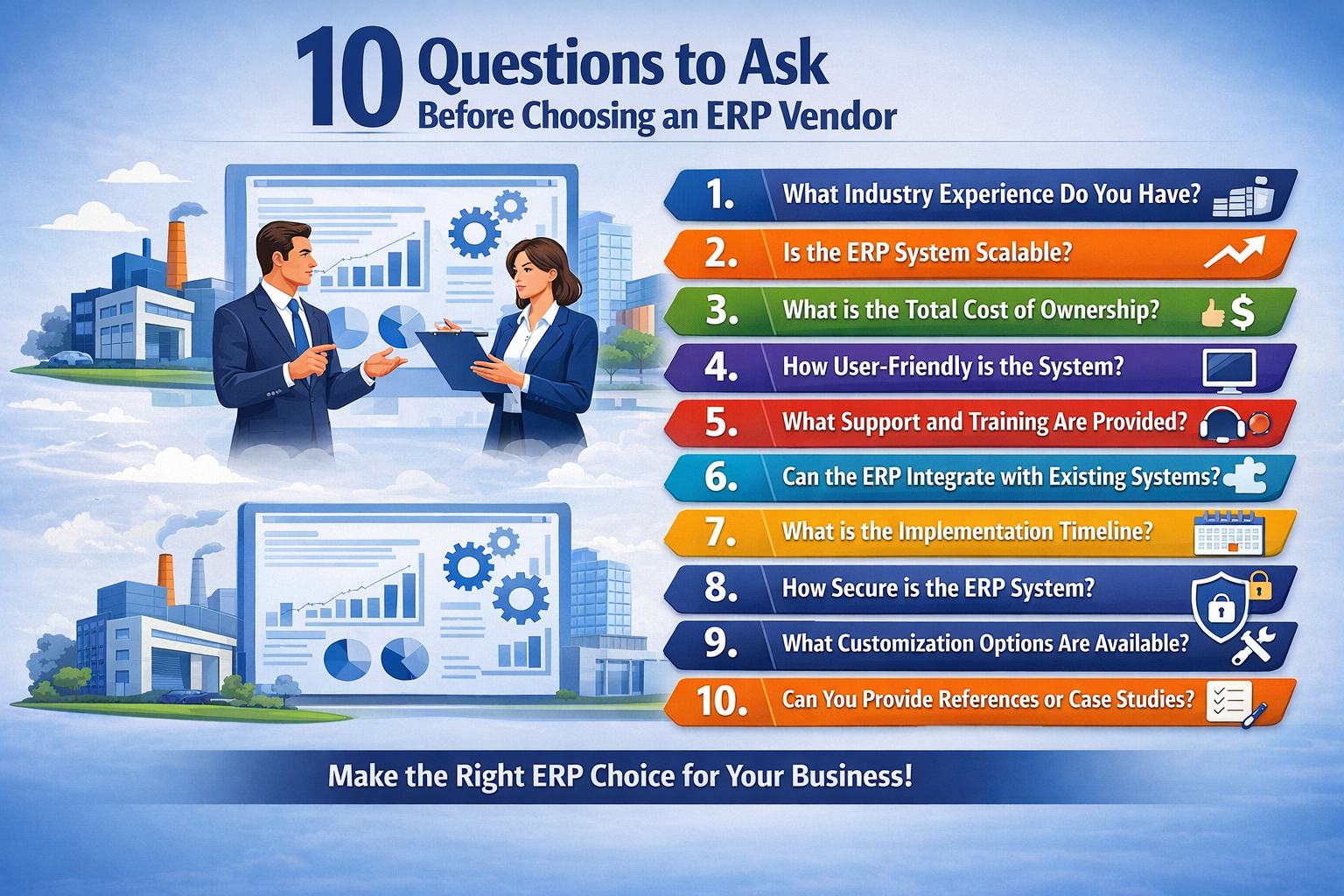
Choosing the right ERP vendor can feel like navigating a maze. With so many options available, businesses often struggle to decide which solution truly fits their needs. That’s why understanding the 10 Questions to Ask Before Choosing an ERP Vendor is crucial for making a confident and informed decision.
An ERP (Enterprise Resource Planning) system connects various business processes into one unified platform. From finance and HR to inventory and customer management, ERP systems streamline operations and boost efficiency.
However, not all ERP vendors are created equal. Picking the wrong one can lead to wasted time, increased costs, and operational headaches. On the flip side, choosing the right vendor can transform your business.
What is an ERP System?
An ERP system is software designed to integrate and manage core business functions. It acts as a central hub where data flows seamlessly between departments.
Some common ERP modules include:
- Finance and accounting
- Supply chain management
- Human resources
- Customer relationship management (CRM)
- Inventory tracking
By using a single system, businesses reduce duplication, improve accuracy, and gain real-time insights.
Why Choosing the Right ERP Vendor Matters
Selecting the right ERP vendor is more than just a technical decision—it’s a strategic one.
A reliable vendor ensures:
- Smooth implementation
- Ongoing support
- System scalability
- Strong security measures
A poor choice, however, can result in delays, budget overruns, and low user adoption.
Understanding Your Business Needs
Before diving into the 10 Questions to Ask Before Choosing an ERP Vendor, you must first understand your own business requirements.
Identifying Core Business Requirements
Start by mapping out your processes. Ask yourself:
- What problems are we trying to solve?
- Which departments need integration?
- What features are essential?
This clarity helps you evaluate vendors more effectively.
Evaluating Current Pain Points
Common pain points include:
- Manual data entry
- Lack of real-time insights
- Poor communication between departments
Recognizing these issues ensures your ERP solution addresses them directly.
Question 1: What Industry Experience Do You Have?
Importance of Industry-Specific Expertise
Not all ERP systems are built the same. Vendors with industry-specific experience understand your challenges better.
For example:
- Manufacturing businesses need production planning tools
- Retail companies require inventory and POS integration
- Healthcare organizations need compliance features
Choosing a vendor with proven experience reduces risk and speeds up implementation.
Question 2: Is the ERP System Scalable?
Planning for Future Growth
Your business won’t stay the same forever. That’s why scalability is critical.
Ask vendors:
- Can the system handle increased users?
- Does it support multiple locations?
- Can new modules be added easily?
A scalable ERP grows with your business, saving you from costly upgrades later.
Question 3: What is the Total Cost of Ownership?
Hidden Costs to Consider
The initial price tag isn’t the full story. You must consider:
- Licensing fees
- Implementation costs
- Training expenses
- Maintenance and upgrades
Some vendors may appear affordable upfront but become expensive over time.
Question 4: How User-Friendly is the System?
Impact on Employee Productivity
A complicated system can frustrate employees and reduce efficiency.
Look for:
- Simple navigation
- Intuitive dashboards
- Minimal training requirements
User-friendly systems lead to faster adoption and better results.
Question 5: What Support and Training Are Provided?
Post-Implementation Support Importance
Even the best ERP systems need ongoing support.
Ask about:
- 24/7 customer support
- Training programs
- Documentation and tutorials
Strong support ensures your system runs smoothly long after implementation.
Question 6: Can the ERP Integrate with Existing Systems?
Integration Challenges and Solutions
Your business likely uses multiple tools already. Your ERP should integrate seamlessly with them.
Common integrations include:
- CRM software
- Payroll systems
- E-commerce platforms
Poor integration can lead to data silos and inefficiencies.
Question 7: What is the Implementation Timeline?
Factors Affecting Deployment Time
ERP implementation can take weeks or even months.
Factors include:
- System complexity
- Business size
- Customization needs
Clear timelines help you plan resources and avoid disruptions.
Question 8: How Secure is the ERP System?
Data Protection and Compliance
Data security is non-negotiable.
Ensure the ERP offers:
- Encryption
- Role-based access
- Compliance with regulations
A secure system protects sensitive business information.
Question 9: What Customization Options Are Available?
Balancing Flexibility and Complexity
Every business is unique, so customization matters.
However, too much customization can increase costs and complexity.
Choose a system that offers flexibility without overcomplicating things.
Question 10: Can You Provide References or Case Studies?
Verifying Vendor Credibility
Always ask for real-world examples.
Look for:
- Client testimonials
- Case studies
- Industry success stories
This helps you verify the vendor’s claims.
Comparing ERP Vendors Effectively
Creating a Vendor Evaluation Checklist
Here’s a simple checklist:
| Criteria | Importance |
|---|---|
| Industry experience | High |
| Cost transparency | High |
| Scalability | High |
| Support services | Medium |
| Customization | Medium |
Using a checklist keeps your decision objective and organized.
Common Mistakes to Avoid When Choosing ERP Vendors
Overlooking Long-Term Needs
Many businesses focus only on current needs.
Avoid:
- Choosing based on price alone
- Ignoring scalability
- Skipping vendor research
Think long-term for better results.
Benefits of Asking the Right Questions
Ensuring ROI and Business Efficiency
By following the 10 Questions to Ask Before Choosing an ERP Vendor, you:
- Reduce risks
- Improve system adoption
- Maximize ROI
- Enhance productivity
It’s a simple yet powerful approach.
FAQs About ERP Vendor Selection
1. How long does ERP implementation take?
It typically takes 3 to 12 months depending on complexity and business size.
2. What industries benefit most from ERP systems?
Manufacturing, retail, healthcare, and logistics benefit greatly from ERP systems.
3. Is cloud ERP better than on-premise ERP?
Cloud ERP offers flexibility and lower upfront costs, while on-premise provides more control.
4. How do I choose between multiple ERP vendors?
Compare features, costs, support, and customer reviews.
5. What is the biggest ERP implementation challenge?
User adoption and data migration are often the biggest challenges.
6. Can small businesses use ERP systems?
Yes, many ERP solutions are designed specifically for small and medium businesses.
Conclusion
Choosing the right ERP vendor is a critical decision that can shape your business’s future. By asking the 10 Questions to Ask Before Choosing an ERP Vendor, you equip yourself with the knowledge needed to make a smart choice.
Take your time, evaluate your options, and don’t rush the process. A well-chosen ERP system can drive efficiency, growth, and long-term success.