

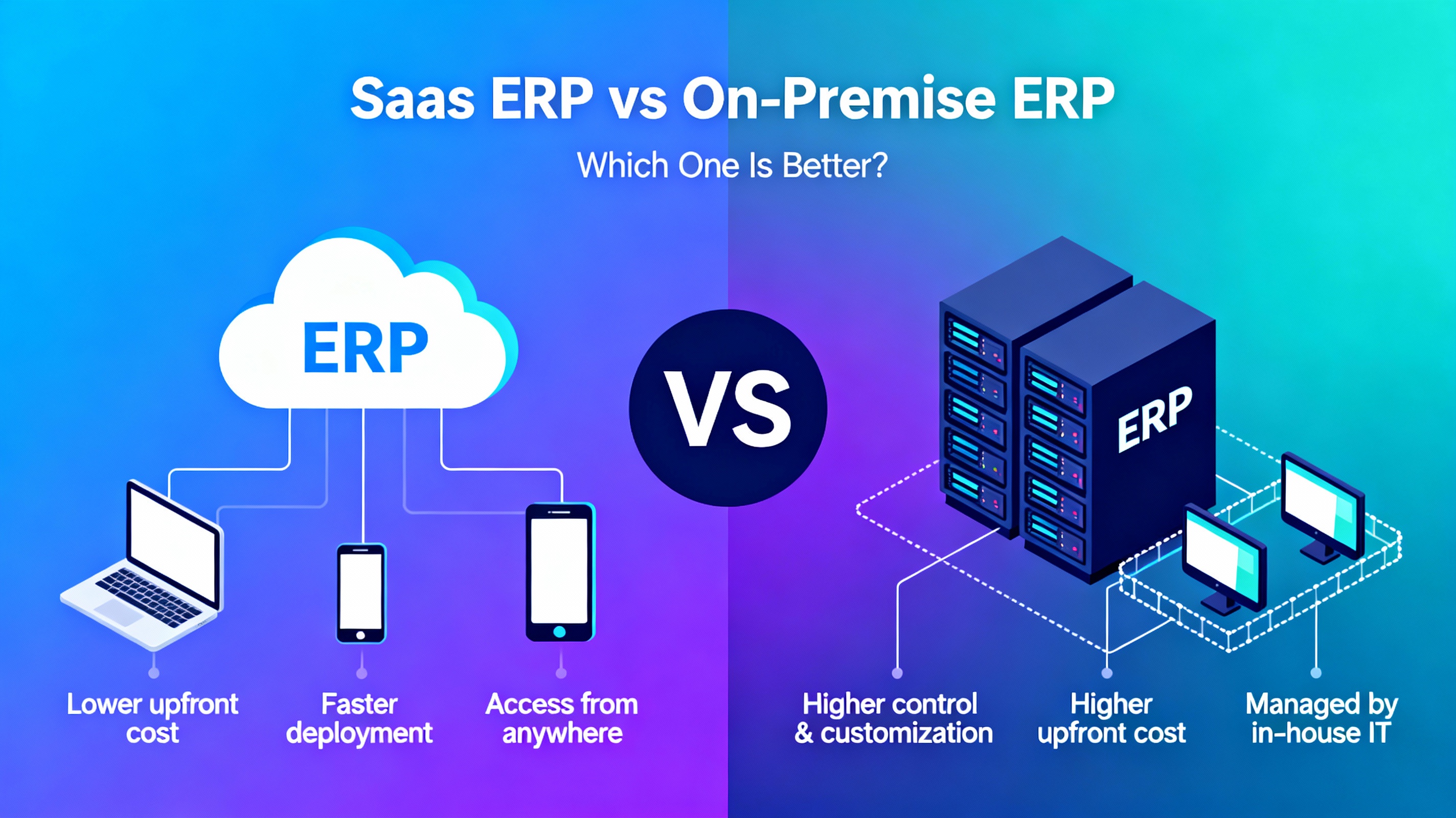
Understanding ERP Systems in Modern Business
Enterprise Resource Planning (ERP) systems have become the backbone of modern organizations. They integrate core business functions like accounting, HR, inventory, and customer management into a single, centralized platform. Whether you’re running a manufacturing unit or a tech startup, ERP helps streamline operations, reduce inefficiencies, and provide real-time insights for better decision-making.
The global ERP market has rapidly evolved — especially with the rise of cloud computing and Software-as-a-Service (SaaS) models. Businesses now face a key question: should they adopt a SaaS ERP solution or stick with a traditional on-premise ERP?
Core Functions of an ERP System
An ERP system typically includes modules that cover:
- Finance and Accounting: Manage budgets, payroll, and cash flow.
- Human Resources: Handle employee data, recruitment, and performance.
- Supply Chain Management: Monitor production, inventory, and logistics.
- Customer Relationship Management (CRM): Improve client engagement and service.
- Reporting & Analytics: Generate insights and reports for better strategy alignment.
What Is SaaS ERP?
SaaS ERP (Software-as-a-Service ERP) is a cloud-based enterprise solution that operates on a subscription model. Instead of installing ERP software on physical servers, it’s hosted on the cloud by a service provider like Oracle NetSuite, SAP Business ByDesign, or Microsoft Dynamics 365.
How SaaS ERP Works
SaaS ERP allows users to access the system through a web browser from any location. The provider manages everything — from infrastructure and updates to data security and backups. This model reduces upfront costs and IT overhead, making it ideal for startups, small, and medium-sized businesses.
Key Features of SaaS ERP Solutions
- Subscription-Based Pricing: Pay monthly or annually instead of large one-time licenses.
- Automatic Updates: Always stay current with the latest version.
- Remote Accessibility: Work from anywhere with an internet connection.
- Scalability: Easily add new modules or users as your business grows.
What Is On-Premise ERP?
On-Premise ERP is the traditional model where the software is installed and managed on a company’s own servers. This approach gives organizations full control over their systems, data, and customizations.
How On-Premise ERP Works
The company’s IT team is responsible for installation, maintenance, upgrades, and data backups. While this setup offers complete data control, it also requires significant investment in hardware, infrastructure, and skilled personnel.
Key Features of On-Premise ERP Systems
- Full Control: Your business manages everything in-house.
- Customization: Tailor the system to unique operational needs.
- Enhanced Security: Data is stored locally, reducing exposure to third-party risks.
SaaS ERP vs On-Premise ERP: Key Differences
Here’s a quick comparison between SaaS ERP and On-Premise ERP:
| Feature | SaaS ERP | On-Premise ERP |
|---|---|---|
| Deployment | Cloud-based | Local servers |
| Cost Structure | Subscription (OpEx) | One-time license (CapEx) |
| Maintenance | Managed by provider | Managed internally |
| Updates | Automatic | Manual |
| Scalability | High | Limited |
| Security | Managed by vendor | Managed by in-house IT |
| Accessibility | Anywhere, anytime | Local access only |
Pros and Cons of SaaS ERP
Pros:
✅ Lower upfront costs
✅ Easy deployment and updates
✅ Remote accessibility
✅ Ideal for SMEs and growing businesses
Cons:
❌ Dependence on internet connectivity
❌ Limited customization
❌ Vendor lock-in risks
Pros and Cons of On-Premise ERP
Pros:
✅ Full control over data and security
✅ Deep customization options
✅ Suitable for large organizations with complex operations
Cons:
❌ High upfront investment
❌ Longer deployment times
❌ Requires dedicated IT maintenance
Which ERP Model Fits Your Business?
Your choice depends on business size, industry, budget, and scalability goals.
SaaS ERP for SMEs
Small to mid-sized companies benefit from the flexibility and affordability of SaaS ERP. It’s easy to implement, requires minimal IT resources, and supports growth without major infrastructure costs.
On-Premise ERP for Large Enterprises
Enterprises with complex workflows and strict data compliance needs often prefer on-premise solutions. They offer extensive control and can be deeply customized to fit niche requirements.
Real-World Examples
- SaaS ERP: Oracle NetSuite, SAP Business ByDesign, Workday
- On-Premise ERP: SAP S/4HANA, Microsoft Dynamics AX, Epicor ERP
Future Trends in ERP Deployment
The ERP future is hybrid. Many companies now adopt a mixed model, combining on-premise control with cloud flexibility. AI, automation, and IoT are also shaping ERP systems to deliver predictive insights and real-time analytics.
FAQs About SaaS ERP vs On-Premise ERP
1. Which is more cost-effective in the long run?
SaaS ERP offers lower upfront costs, but long-term expenses depend on subscription length and scalability needs.
2. Is SaaS ERP secure?
Yes. Top vendors use encryption, firewalls, and compliance standards like ISO 27001 to ensure data protection.
3. Can I migrate from On-Premise to SaaS ERP?
Absolutely. Many vendors offer migration tools and hybrid integration options.
4. Which ERP is better for startups?
SaaS ERP is better suited for startups due to its affordability and quick deployment.
5. Do On-Premise ERPs offer better performance?
In some cases, yes — especially for large enterprises with robust infrastructure.
6. What’s the future of ERP deployment?
Hybrid ERP solutions combining cloud and on-premise functionalities are becoming the industry standard.
Conclusion: Making the Smart Choice
Choosing between SaaS ERP vs On-Premise ERP depends on your business goals, infrastructure, and growth plans. SaaS ERP brings agility, scalability, and low maintenance — perfect for modern, fast-moving businesses. On-premise ERP, however, provides unmatched control and customization, ideal for large enterprises with complex requirements.
In 2025 and beyond, a hybrid ERP strategy may offer the best of both worlds — combining cloud efficiency with on-premise reliability.